t h e s u b t l e b e i n g s
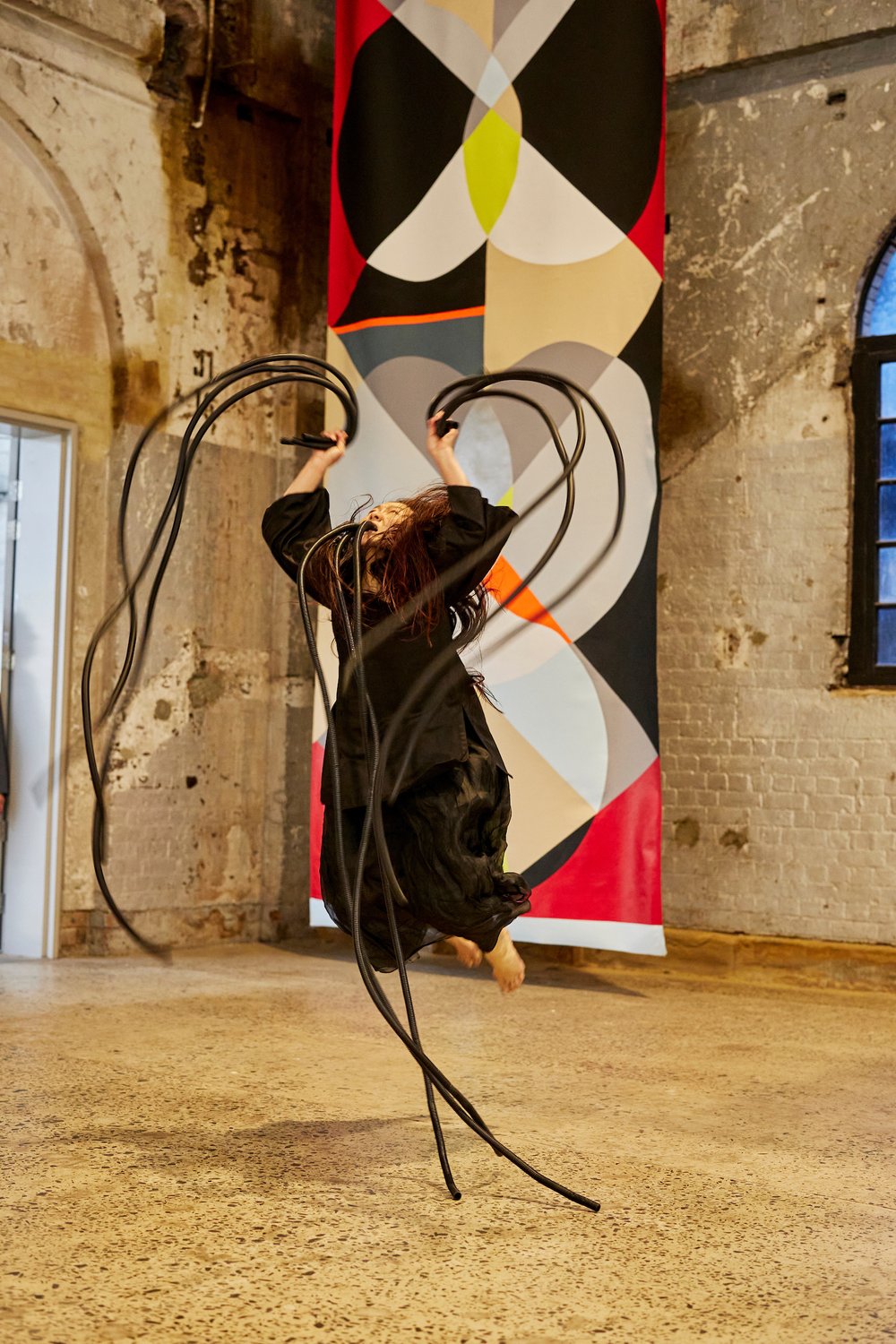
whole-space performance art installation
Articulate project space
11 - 25 March 2018
Performance sessions: 22, 23, 24 March 2018
This outcome is the culmination of a two-year research journey which included travel into Sabah (Malaysian Borneo) and Hanoi (Vietnam), to witness the Kaamatan Festival in 2016 and Len Dong dance rituals in 2017.
t h e s u b t l e b e i n g s is a performance installation that is the result of WeiZen’s two years of travel in Asia to research and witness of rituals in Sabah (East Malaysia) and Hanoi (Vietnam), rituals that are connected to her own geographical and socio-cultural lineage.
Funded by the Australia Council for the Arts "To Study & Develop Performances, Interpreted & Reimagined of South-East Asian Animistic & Shamanistic Rituals" (2016–2018), this project was framed by an auto-anthropological methodology, which sought to explore the origins of performance and performativity through cultural, historical, and mythological lenses in Southeast Asia.
The methodology here was rooted in my personal connection to the socio-cultural lineage and oral history of animistic and shamanistic rituals in my home region of Southeast Asia. It also incorporates the migration history of Fujian people to Malaysia and Indonesia. This personal connection to themes of displacement, uprooting, and cultural identity informed the research questions and the approach to studying rituals. It highlighted the transformative power of ritual and its importance as a unifying force between performers and audiences, where both act as ritual assistants. This framework shaped the research question: How can ritual-like experiences transform both the performer and the audience?
The methods included:
Field Research and Observation: I conducted fieldwork in Southeast Asia, observing rituals and possession events. This method was guided by the importance of understanding the cultural and historical context of the rituals. Collaborations with local guides and experts were crucial in gaining access to these rituals, the ritual-makers and understanding their significance., leading to the bobohizans in Sabah and Len Dong dancers in Hanoi.
Documentation: The rituals and possession events were documented through video footage, written and visual diary which served as a resource for analyzing the dynamics of audience-performer unification. This method allowed the researcher to capture the essence of the rituals and use them as motifs for performance reimagination.
Performance Reimagination: The documented rituals were reinterpreted and reimagined into site-specific performances. These performances aimed to collapse traditional audience-performer boundaries, creating a shared ritual-like experience. The methodology’s focus on the transformative power of rituals shaped the methods used to design these performances.The methodology of exploring cultural and historical roots informed the methods of field research and documentation. These methods, in turn, provided insights into the dynamics of ritual settings, which were used to develop alternative performance structures. For example, the project revealed how possession could act as a transformative experience, leading to the creation of performances that allowed space for improvisation and mediumship.
Above is a slideshow of t h e s u b t l e b e i n g s March 2018
All images are taken by Vsevolod Vlaskine and Alan Schacher unless stated otherwise.
t h e s u b t l e b e i n g s as a performance-installation at Articulate project space employs hair, text, sound, mirror film, sound circuitry, movement, vocals and video.
My collaborators are Katja Handt (costume designer), Iqbal Barkat (associate director - film, dramaturgy, installation), Vincent Tay (lighting & event cinematography), Binh Ta (cultural guide and associate artist in Hanoi), Damian Castaldi (kinetic sound circuitry design & installation), Michael Tosuito (sound design collaborator & engineer), Sarah Keighery, William Seeto, Louise Morgan, Alexandra Mitchell, Naomi Ullmann, Alan Schacher (installation team), Oliver Damian (performance ritual helper), Alan Schacher (choreographic consultant).
the thinking
“I am interested in the performance of ritual-like experiences of being possessed as a transformative experience for both the performer and onlooker. Then there is the notion of possession as the filling in of, and mediating of, many kinds of absences. It makes me wonder about the kinds of qualitative states that may make possession possible: mental vulnerability, uncertainty of social identity, lack of access to deeper communion or devotional spaces (and I don’t mean just religious institutional buildings), the thinning veil between life and death, the need for empowerment, unbelonging, dislocation, displacement and uprooting.
Coming from a lineage of Fujian people who migrated into Malaysia and Indonesia before the Cultural Revolution in China, the above-mentioned states are familiar. I suspect the migration process can exacerbate them, depending on the level of trauma and degree of choice involved. Migrants have to grapple with the cultural distance they have travelled from as well. I guess for some, a migrant’s world can be akin to a state of perpetual purgatory…
Possession can possibly be an instrument against despair and humiliation, where perhaps even a person dispossessed of country of origin, who is part of an invisible class in society or whose sense of identity is porous, can experience a sense of spiritual authority and communion, for example.
Part of my practice is the continual search for a performance structure that has integrity and yet is so minimal that it allows sixty to seventy percent space for improvisation and thereby hopefully, mediumship to occur. By mediumship I mean heightening my sensitivity to the guts of the performance, body imageries I am working on, and the presence of the space I am inhabiting..."
Reflections
Unification of Audience and Performer: The methodology emphasised the importance of rituals as events where the audience and performer act as ritual assistants. This understanding shaped the methods used to create participatory performances which allowed the performer and audience roles to interchange constantly, blurring the roles of observers and the observed. This may have fostered another level of shared experience and ‘togetherness’.
Possession as Transformation: The focus on possession and animistic rituals as a transformative experience influenced the methods used to explore this phenomenon. I sought to create performance structures that risked many unknown gaps in time and actions to facilitate the occurrence of improvisation and mediumship.
Cultural and Historical Context: The auto-anthropological methodology ensured that the methods were deeply rooted in the cultural and historical context of the rituals. I asked questions of the ritual-makers, prompting them to talk about the ‘origins’ of the first dance-steps and what may have prompted the reason for the rituals. This approach provided a richer understanding of the rituals and their significance, which was reflected in the reimagined performances.
Incorporating Documentation: Documenting rituals and performances served as a valuable resource for analyzing and reimagining performance structures, providing me with a deeper understanding of the dynamics of ritual settings.
Reading for research context:
Evans, G. (1993). Asia’s Cultural Mosaic: An Anthropological Introduction.
DeBernardi, J. (2004). Rites of Belonging. Stanford University Press.
DeBernardi, J. (2006). The way that lives in the heart : Chinese popular religion and spirit mediums in Penang, Malaysia. Stanford University Press.
I also acknowledge:
Osewan bin Ayung and Mary binti Mojihit; Datuk Jeffry bin Ayah @ Datuk Cobra and Datin Inulian @ Eliani binti Atajau, Kampung Minyak, Sabah.
Oduzan bin Musu and Iyaang in ‘House of Gongs’, Kampung Pituru, Sabah.
Susan Bansin, whose family are from Penampang 'Proper'.
The Lendong ritual dancers in Nam Dinh and Hanoi, including Minh Do Hoàng
Dr Ngoc Mai Nguyen (anthropologist in Hanoi)
Photos below by Vsevolod Vlaskine, Vincent Tay and Alan Schacher


This project has been assisted by the Australian Government through the Australia Council, its arts funding and advisory body
