

Collaborating with Place and Material
col [together] - laborare [to work]
合作 Hézuò - translates on a surface level, to mean co-author, combine, conspire, contribute
Collaborative processes highlight the role of interactions and sharing exchanges, to arrive at more insightful creative solutions. Added to this is that we would, at present, tend to consider collaboration to occur only between humans and some living creatures. A leap of imagination is involved to move beyond this, and apply the philosophy of collaboration where the question we use to frame this workshop is, ‘What does it mean to work together with a place towards a special purpose? ‘
Workshop Concept: Collaborating with Place and Material
Overview
This performance art workshop invites participants to explore the intricate relationship between psychology, philosophy, and the concept of place. By examining the collaborative relationship between humans and their environments, we seek to deepen our understanding of what it means to co-create with the spaces that surround us. Let us consider how places can co-author our experiences and how working with material can reveal deeper insights into our human consciousness.
Objectives
To Understand Place: Delve into the histories, narratives, and sensory experiences that a place embodies and how these factors influence our interactions with it. How do our physical surroundings shape our emotions and perceptions?
To Explore Collaboration: Challenge the conventional boundaries of collaboration that are primarily centered on human interaction. Encourage participants to be open in attempting ways to incorporate material and environment in creative collaboration.
To Create Meaningful Connections: Foster a sense of community among participants while engaging with the physical and metaphysical aspects of the places we inhabit. Participants are encouraged to engage in physical exercises that promote a tactile relationship with materials, reflecting on how these interactions influence our experiences and creativity.
Workshop Activities
Embodied Listening:
Engage in mindful walking exercises within the chosen space, developing an awareness of different textures, sounds, and movements that characterize the environment.
Focus on attuning our senses to the rhythms and energies of the place, facilitating a dialogue between participants and the environment.
Material Experimentation:
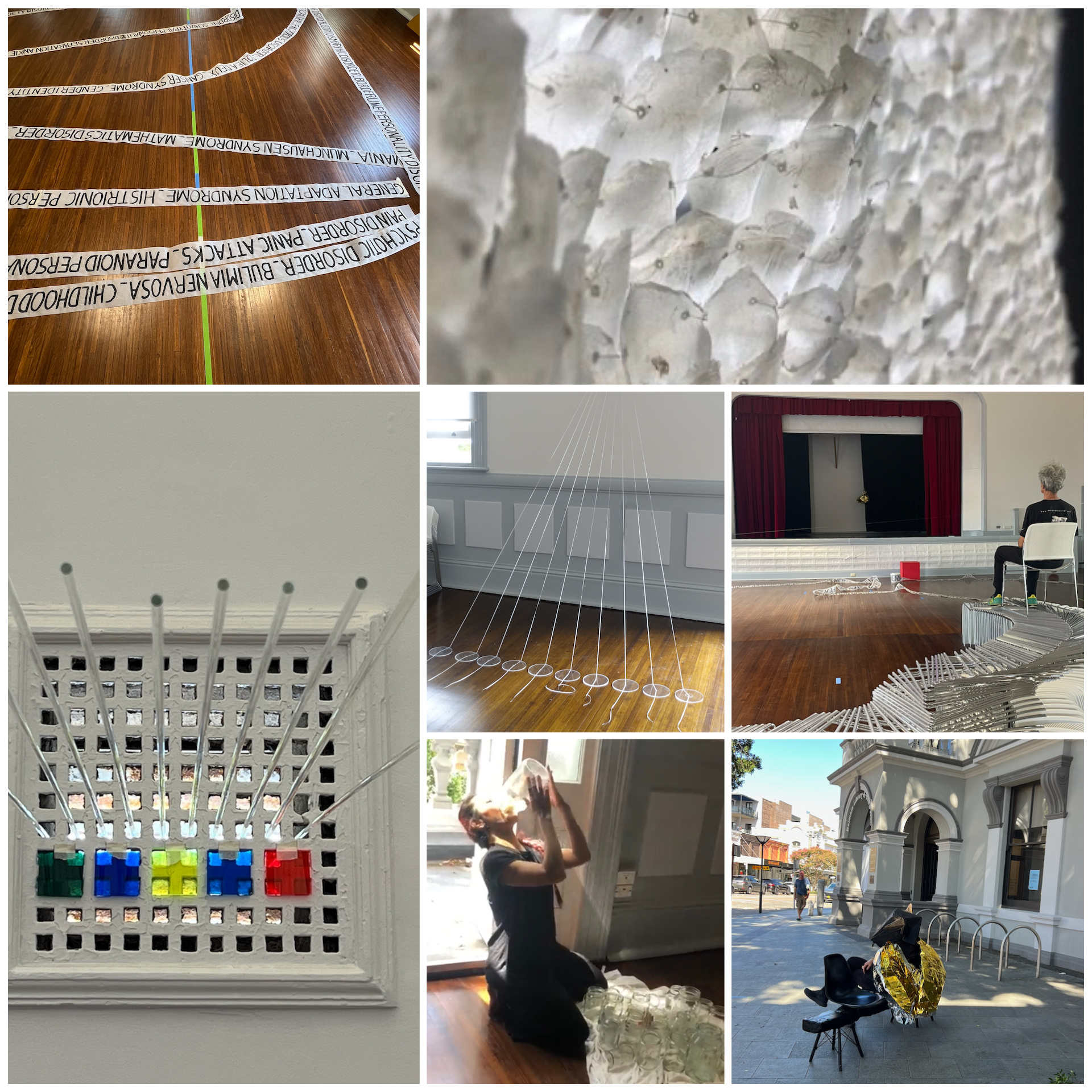
Using found materials from the location, participants will be guided to create individual or collective installations. Participants will engage in physical exercises that promote a tactile relationship with materials, reflecting on how these interactions influence our experiences and creativity.
Discussion will center on the characteristics and stories of these materials, and how they resonate with the sense of place.
Performative Synthesis:
Over the 2-day workshop, participants will collaboratively devise a short performance that embodies their explorations, emphasizing the interaction between bodies, materials, and the chosen place.
The final presentation invites an audience to witness the emergent relationships that arise from this interdisciplinary inquiry.
Philosophical Reflection:
Participants will reflect on their personal relationships with places they inhabit and how those places influence their identity and consciousness.
Works-in-progress which have been witnessed will act as points of departure, to consider how collaboration with place and material has shifted their understanding of human consciousness.
The experience highlights the profound and often overlooked conversations that exist not only between participants but also with the very spaces that encompass us. Through this lens, we embark on an exploration includes the creation myth of the original people of the place, and at the same time engage with the details of what we often bypass in an area by slowing down the speed in which we normally walk past the materials and objects which exist around us. Perhaps this experience urges all of us to reconsider the essence of collaboration itself, especially when extended to our surroundings.